“Hugo Pratt, Imaginary Geographies”, from 26 March to 14 June 2026 extended until October 4th – Le Cadran, Liège.
Following its presentation in Siena, the solo exhibition dedicated to Hugo Pratt continues its European journey. Imaginary Geographies follows the same route, but from a different perspective.
Within the spaces of Le Cadran — a former railway station now converted into a cultural centre — the exhibition unfolds through a series of thematic sections, conceived as narrative gateways. Visitors are invited to chart their own course along a non-linear path, where the works engage in dialogue with one another and with the sources that inspired them.
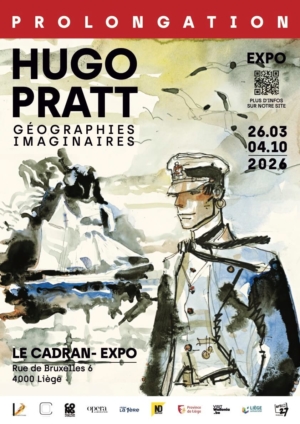
Le Cadran, Rue de Bruxelles, 6, 4000 Liège
OPENING HOURS:
daily, from 10.00 to 18.00
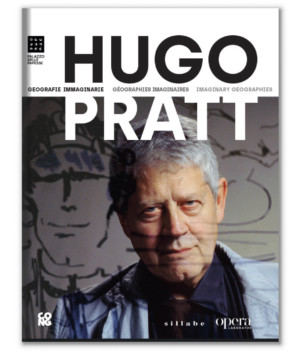
The exhibition catalogue
“Hugo Pratt, Imaginary Geographies” is the catalogue of the retrospective exhibition held in Siena from 10 April to 19 October 2025 and republished as an adaptation for the exhibition in Liège. Over 330 colour and black-and-white photographs, watercolours, original plates, comic books and period material.
Published in three languages: Italian, French and English.
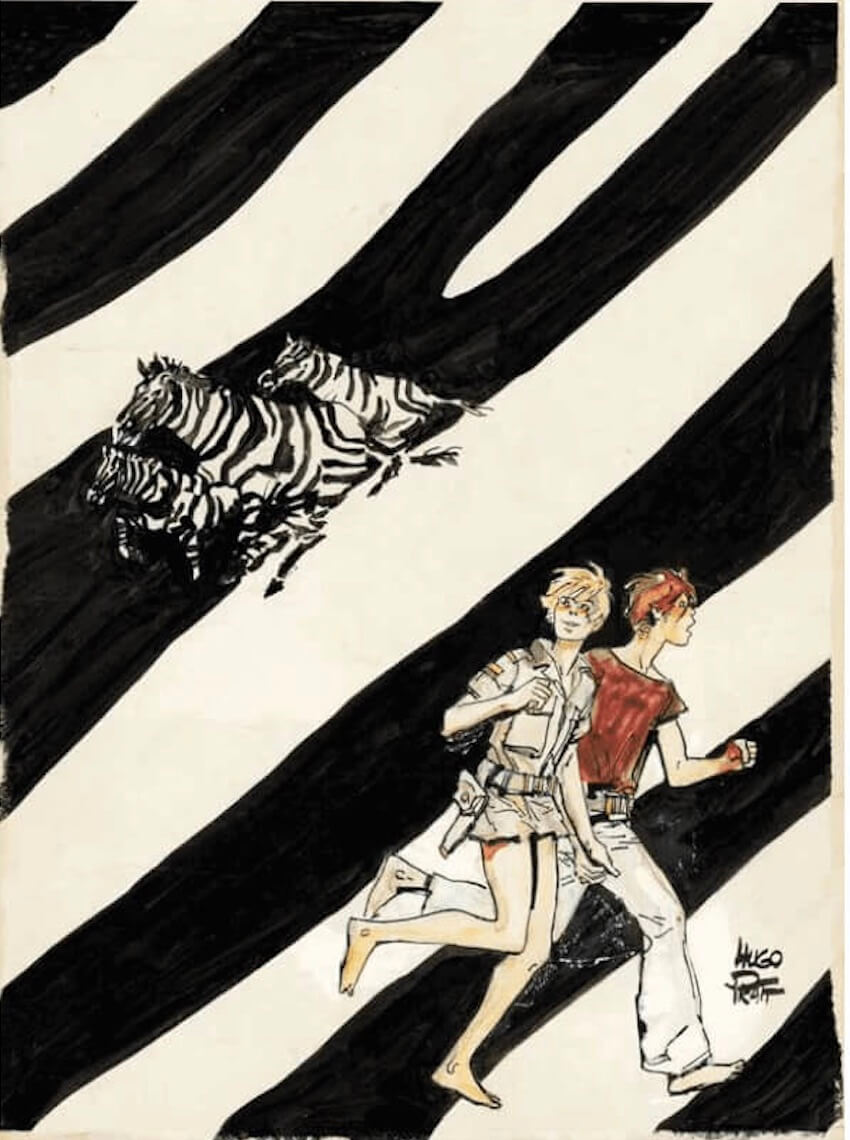
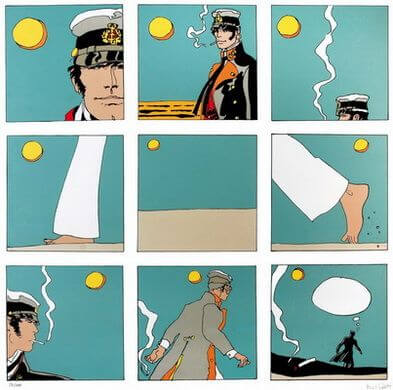
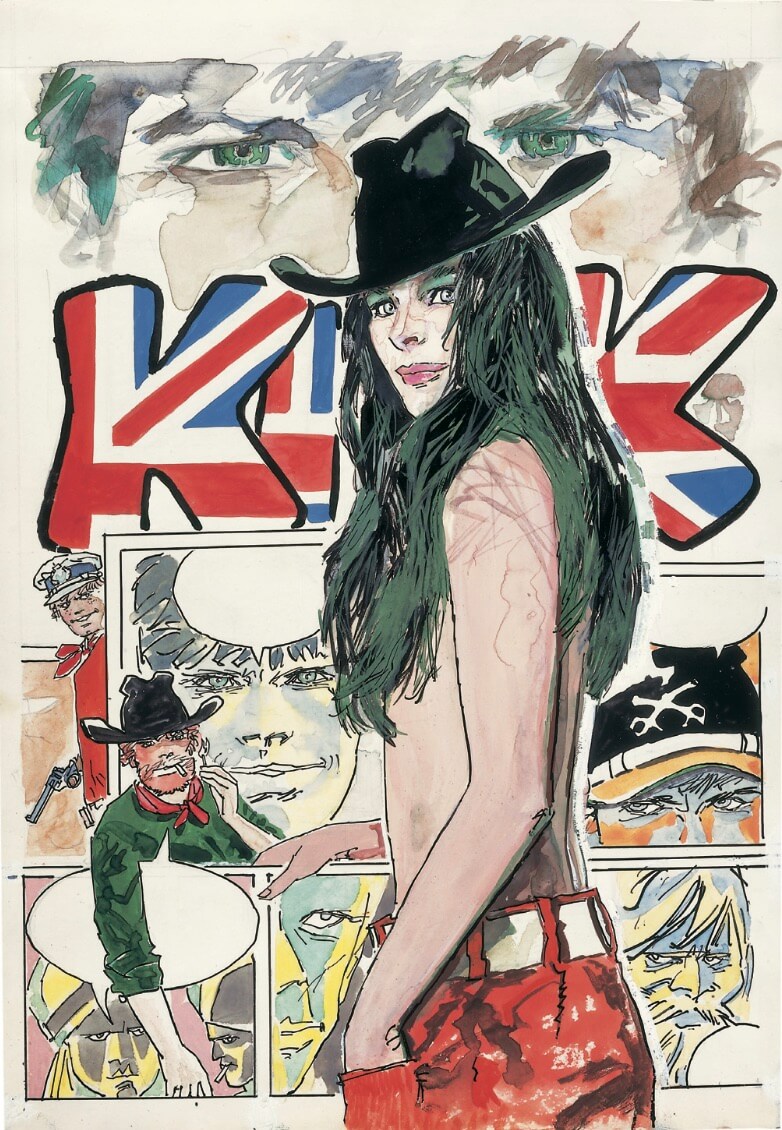
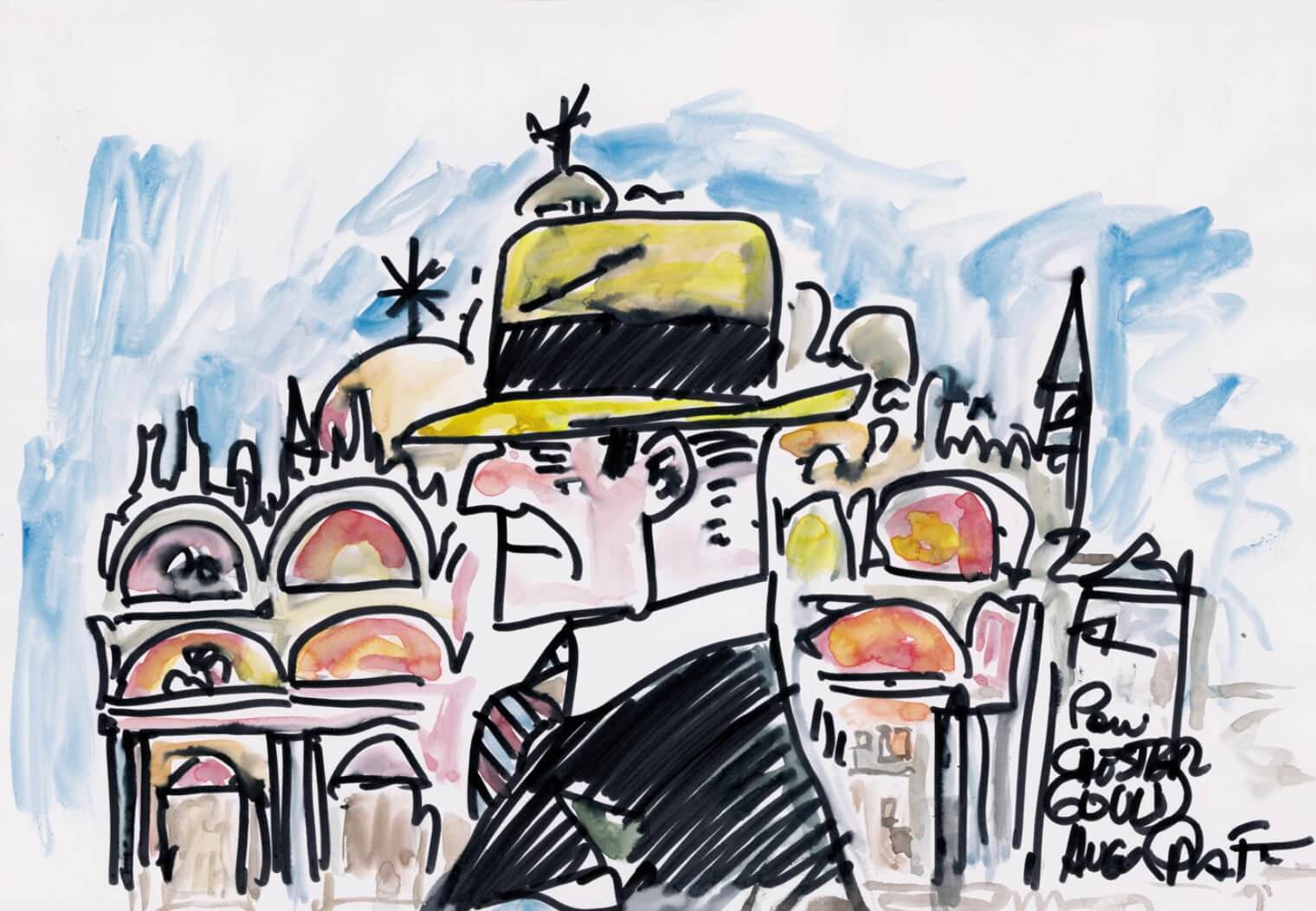
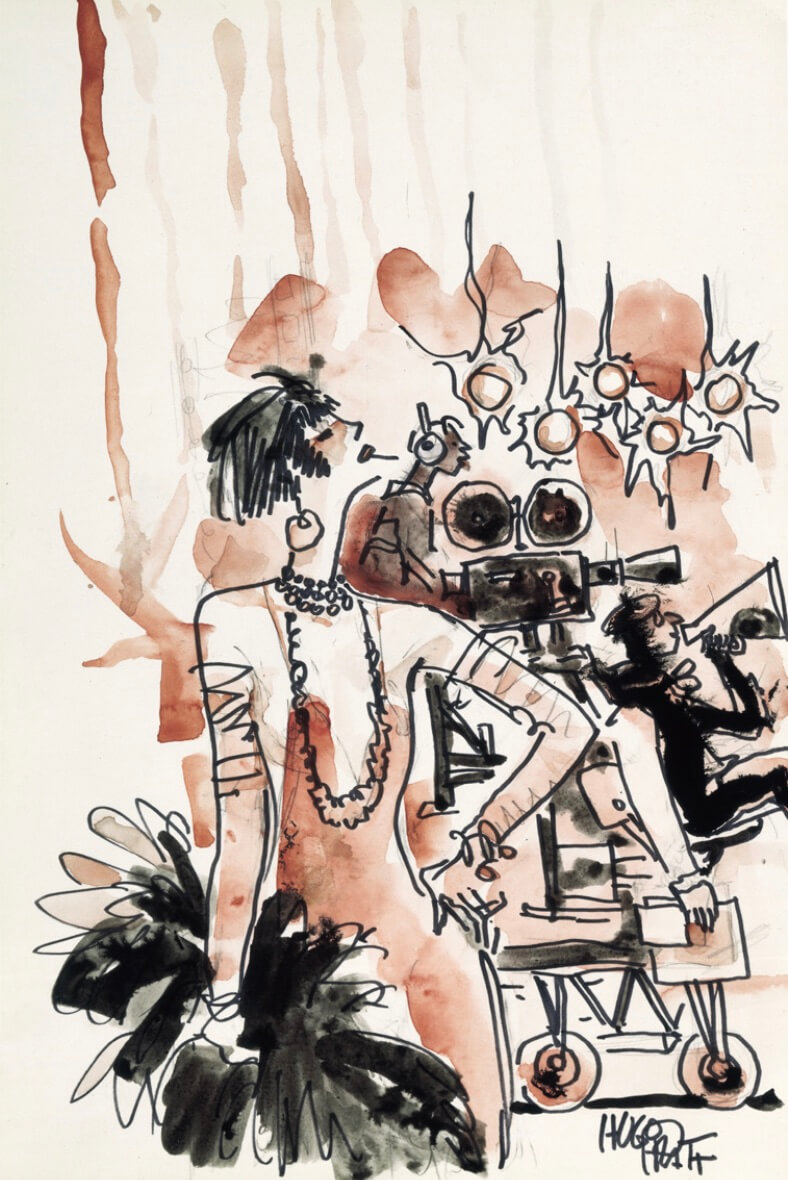
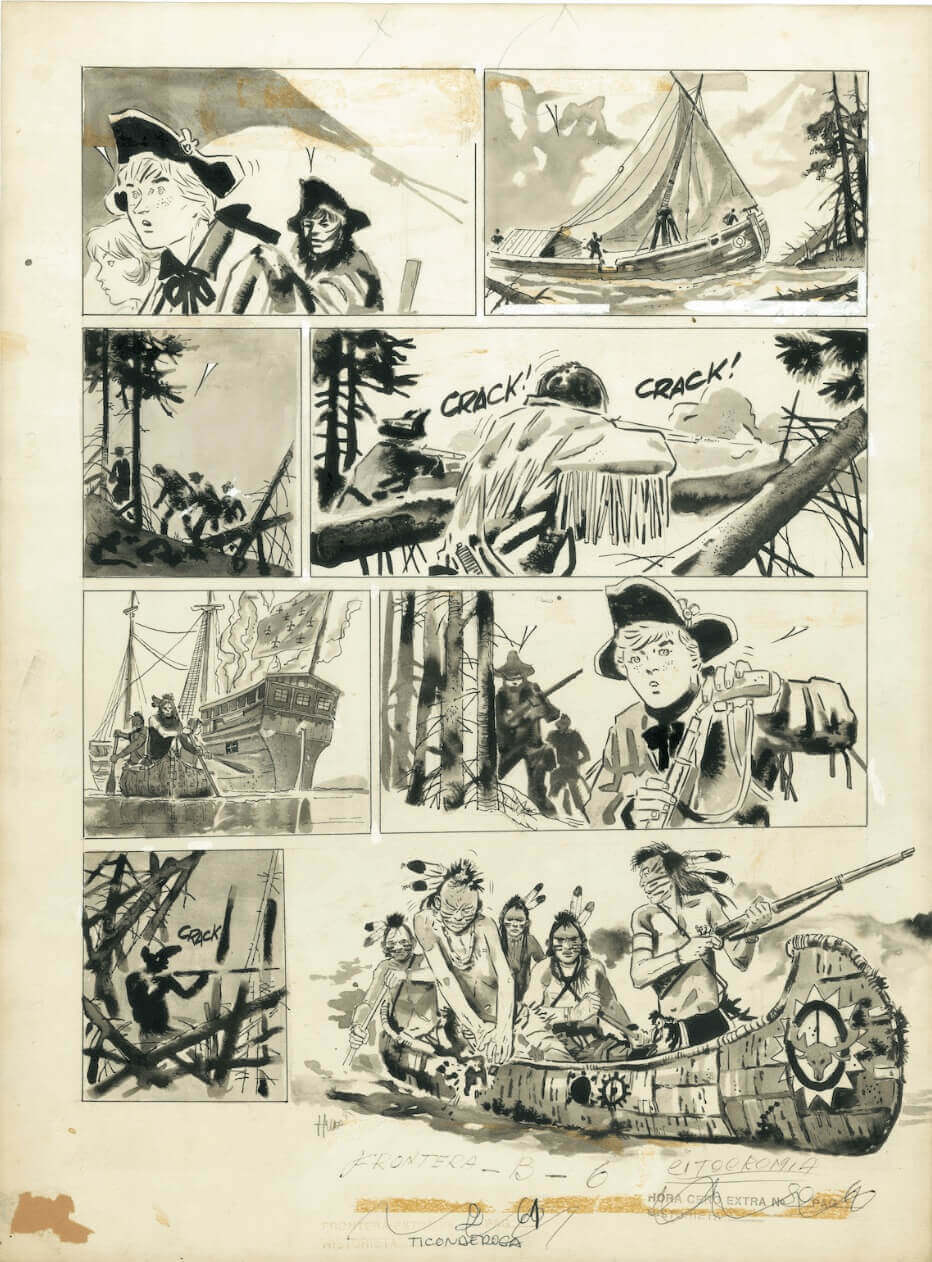
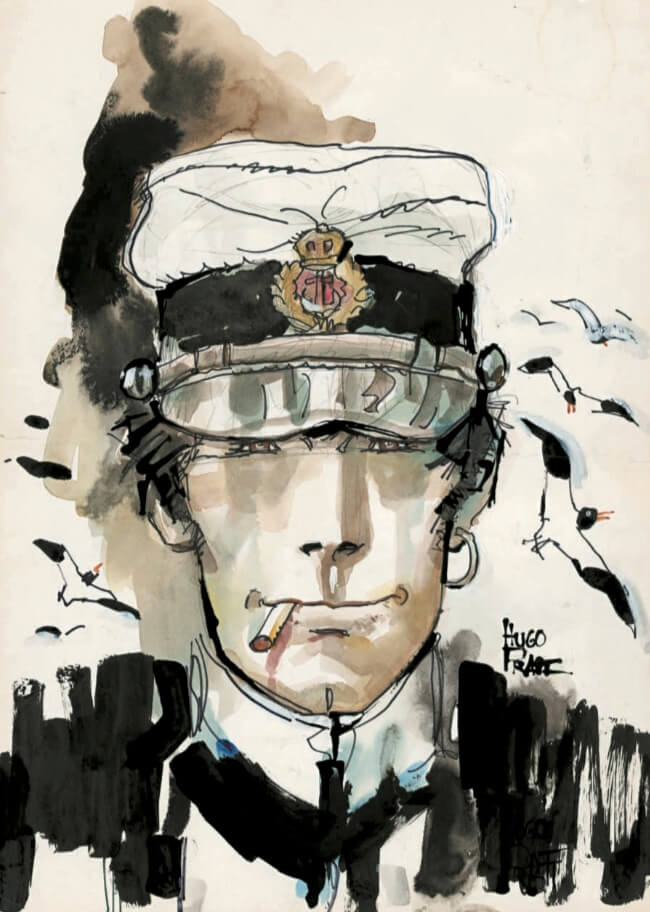
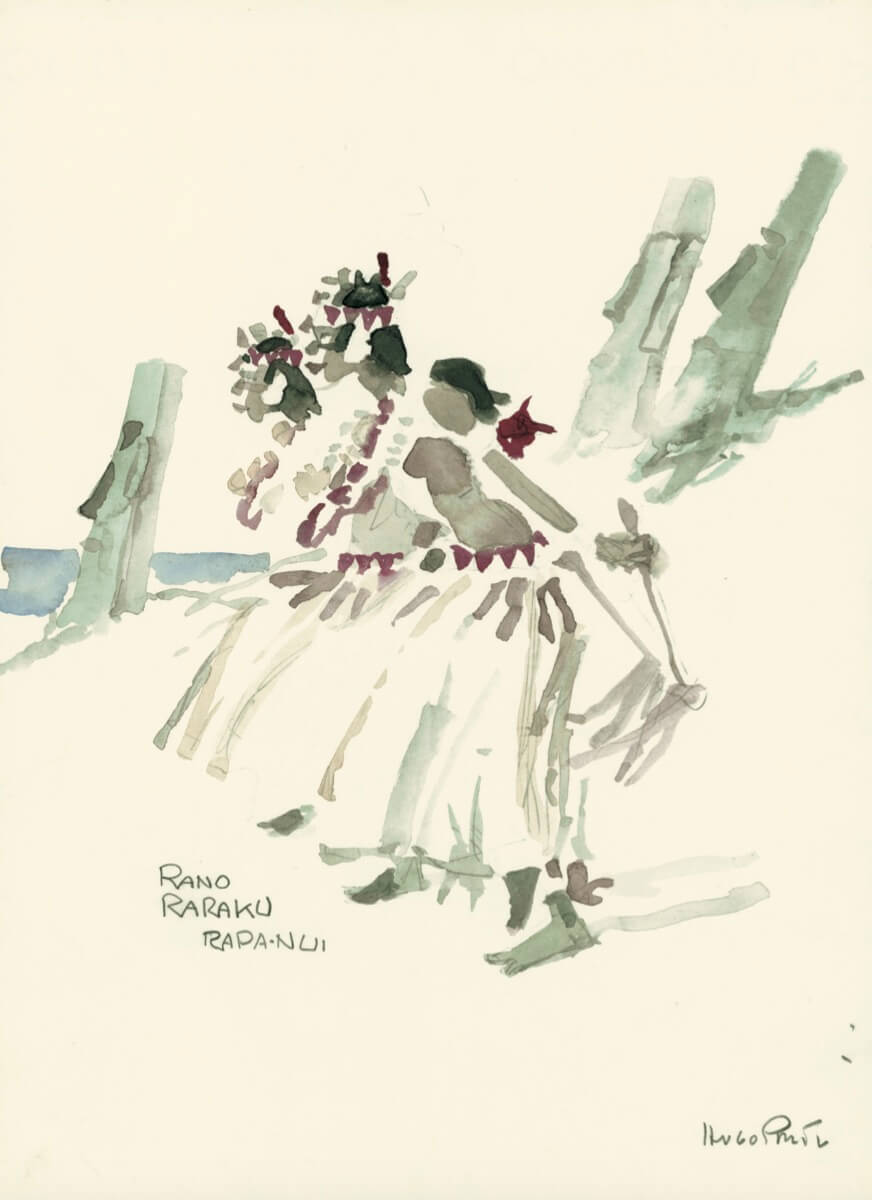
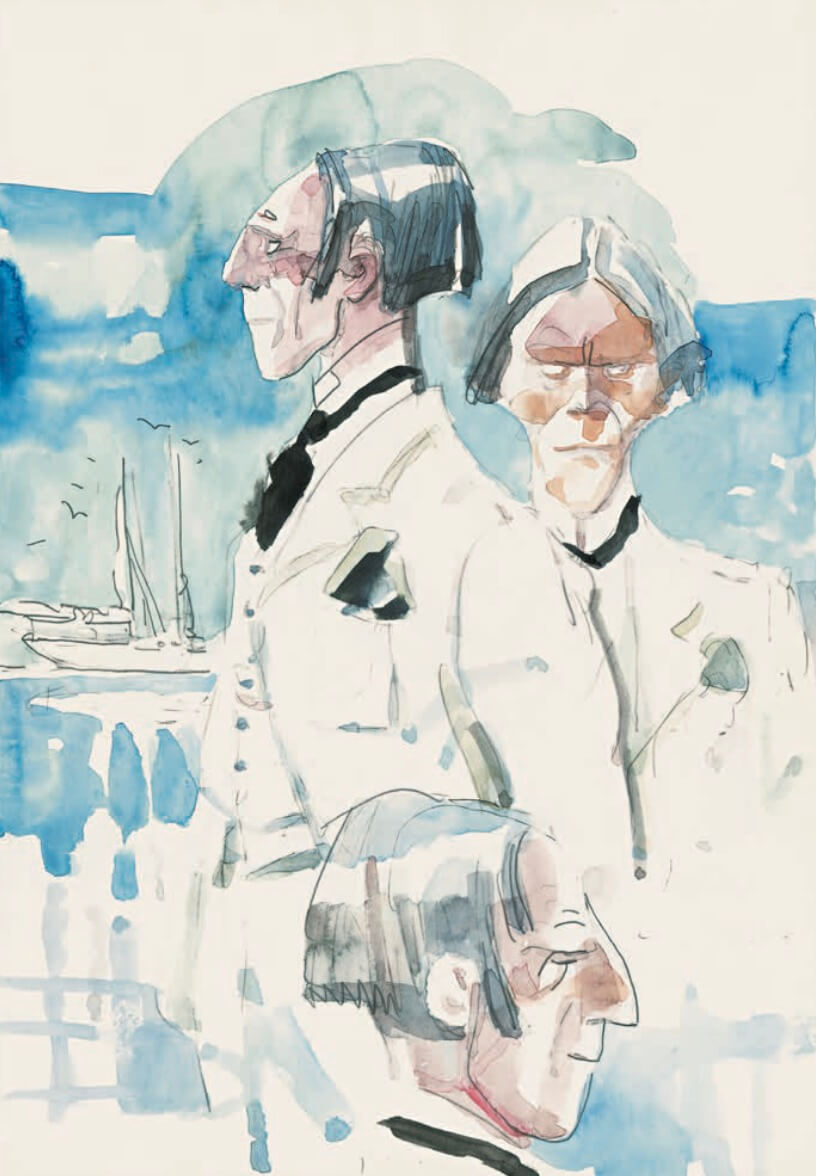
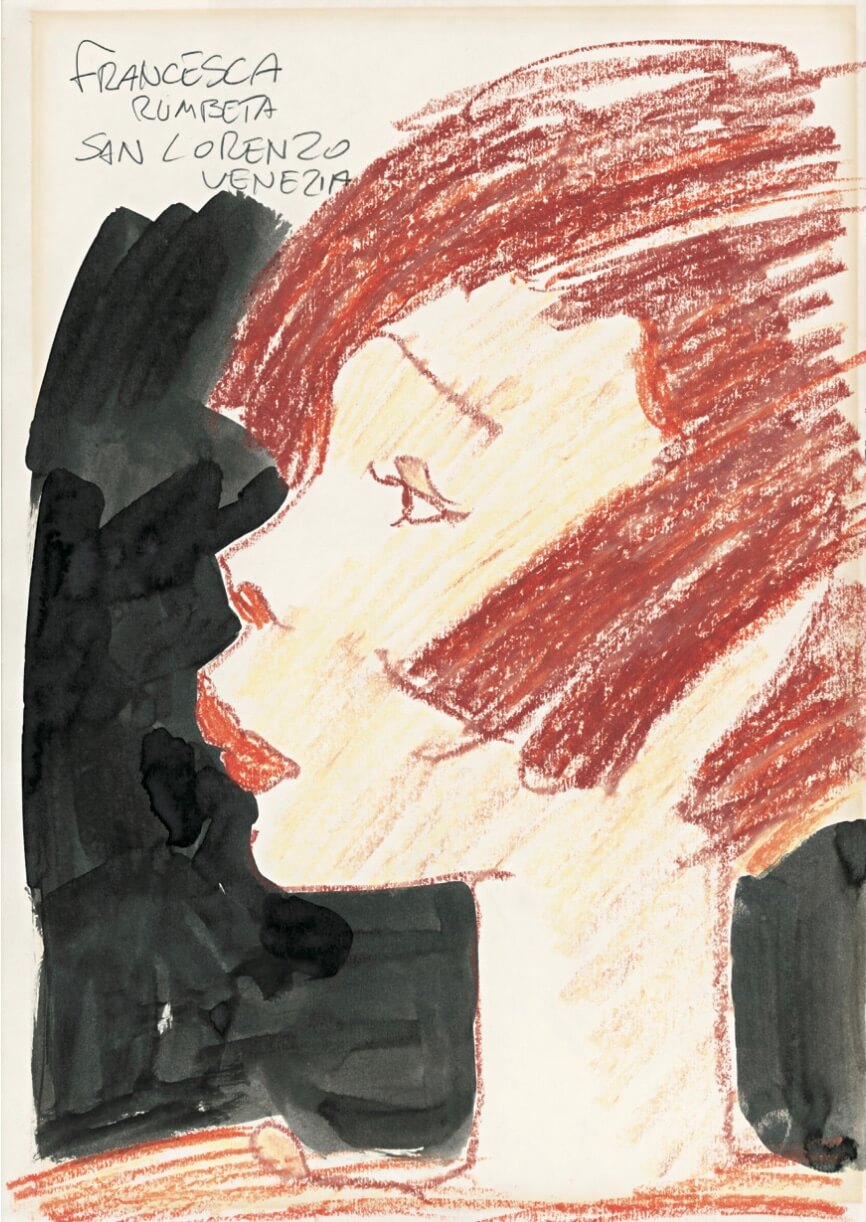
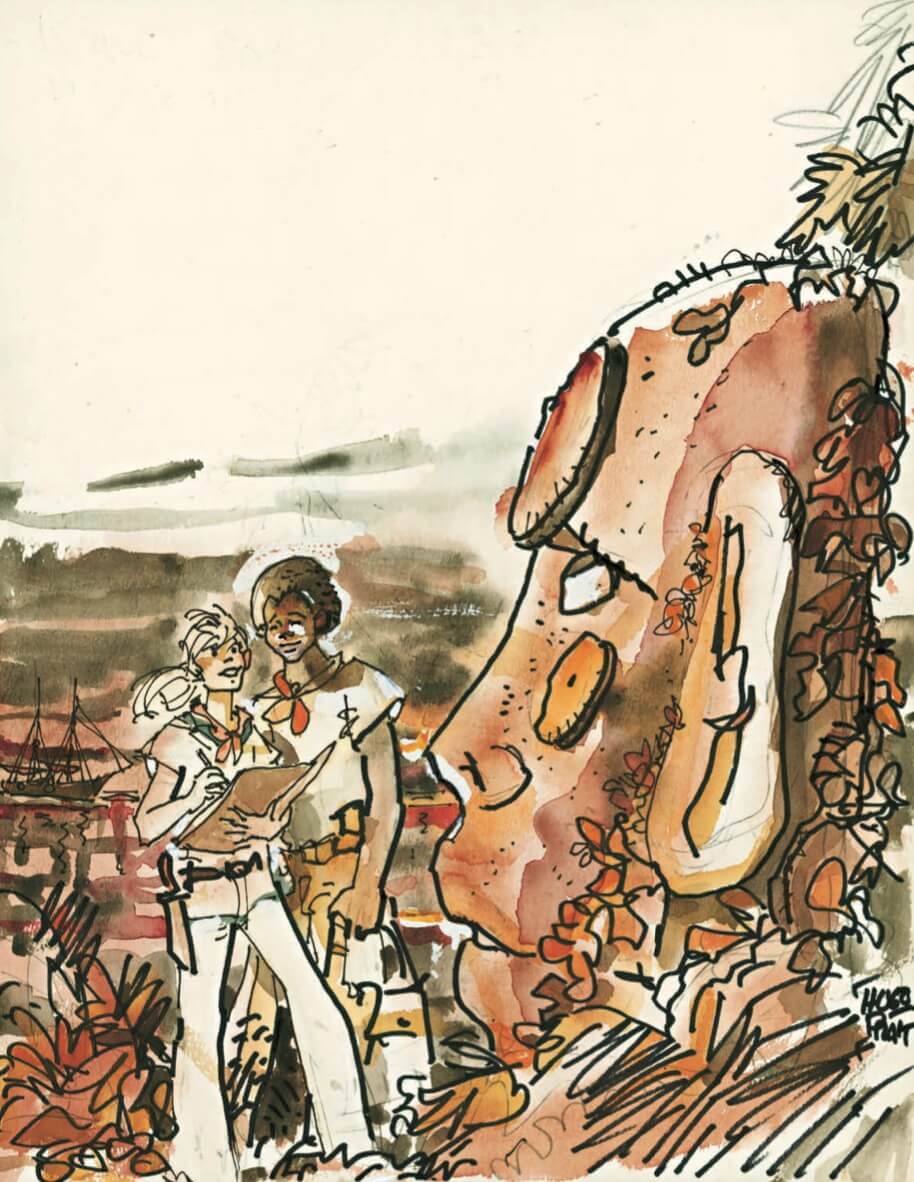
Some of the artworks on display at the La Cadran for the exhibition dedicated to Hugo Pratt ‘Imaginary Geographies’